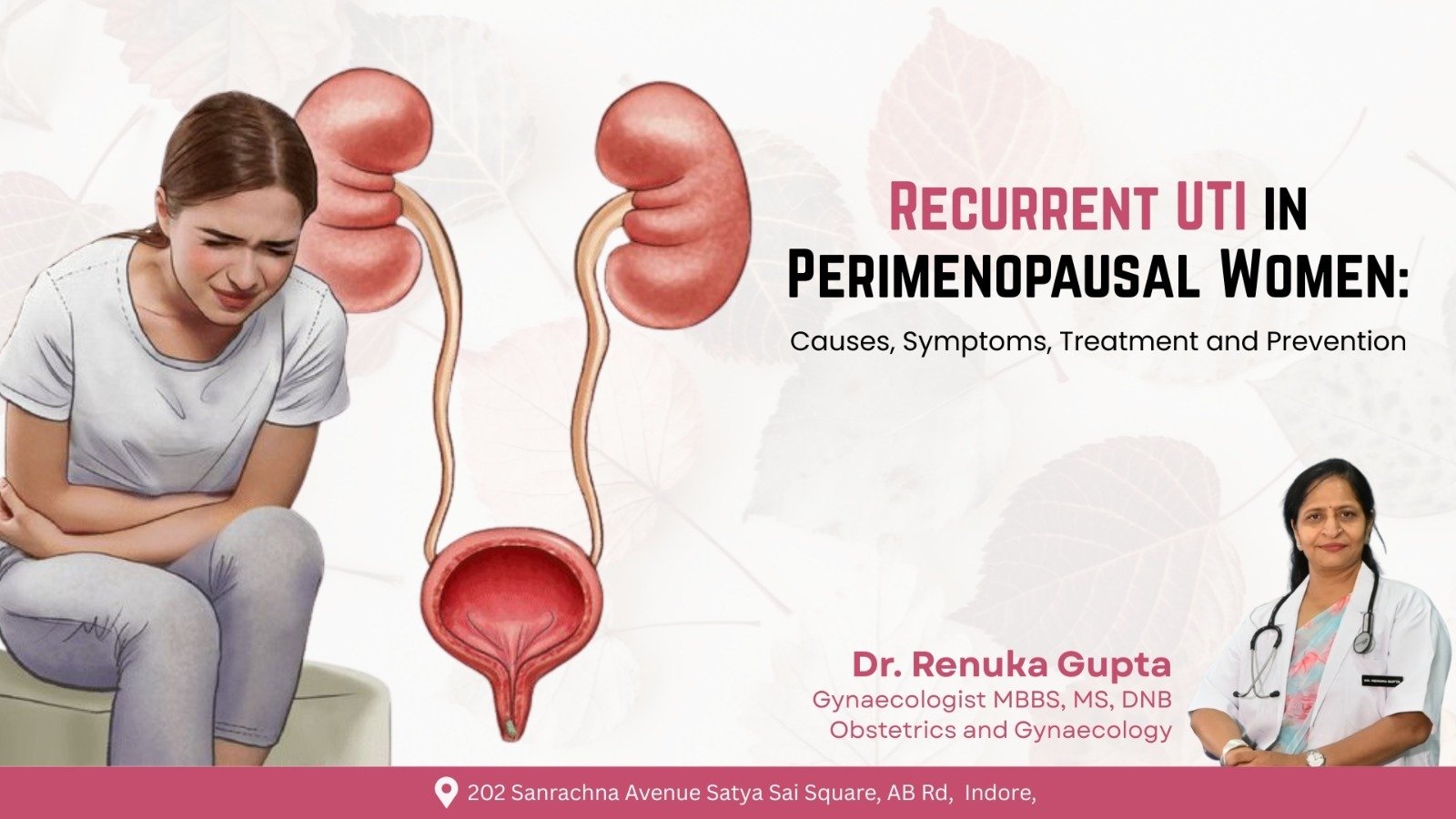
Many women entering their 40s and early 50s start experiencing repeated urine infections along with hormonal changes. Recurrent UTI is one of the most common yet ignored health problems during perimenopause. Women searching for recurrent UTI treatment in indore often complain about burning urination, frequent urge to pass urine, discomfort, and infections that keep returning even after medication. According to Dr Renuka Gupta Gynecologist in indore, hormonal changes during perimenopause can make women more vulnerable to repeated urinary tract infections if proper care and treatment are not taken in time.
A urinary tract infection, commonly called UTI, affects the urinary system including the bladder, urethra, and kidneys. While UTIs can happen at any age, they become more common during perimenopause because of hormonal imbalance and changes in intimate health.
For many women, repeated UTIs become physically exhausting and emotionally stressful. Some women stop traveling, avoid social gatherings, and even lose sleep because of the constant urge to urinate or fear of another infection returning.
What is Perimenopause?
Perimenopause is the transition phase before menopause when the body slowly starts producing less estrogen. This phase can begin in the early 40s and continue for several years before periods stop completely.
During this time, women may experience:
- Irregular periods
- Hot flashes
- Mood swings
- Sleep disturbance
- Vaginal dryness
- Weight changes
- Frequent urine infections
Hormonal fluctuations during perimenopause affect not only reproductive health but also bladder and urinary tract health.
What is Recurrent UTI?
A recurrent urinary tract infection means getting urine infections repeatedly within a short period.
Doctors usually consider it recurrent when:
- A woman gets two or more UTIs within six months
- Or three or more UTIs within one year
Many women visiting Dr Renuka Gupta Gynecologist in indore say they feel temporary relief after medicines, but symptoms return again after a few weeks or months.
This repeated cycle can become frustrating if the actual root cause is not identified properly.
Why Does Recurrent UTI Happen During Perimenopause?
One of the biggest reasons is reduced estrogen levels. Estrogen plays a major role in keeping vaginal and urinary tissues healthy and naturally protected from harmful bacteria.
As estrogen decreases:
- Vaginal tissues become thinner
- Natural lubrication reduces
- Healthy bacteria decrease
- Harmful bacteria grow faster
- Bladder tissues become weaker
These changes increase the chances of infection again and again.
Women looking for recurrent UTI treatment in indore are often surprised to learn that menopause-related hormonal changes can directly affect urinary health.
Common Symptoms of Recurrent UTI
Symptoms may vary from woman to woman, but some common signs should never be ignored.
Burning Sensation During Urination
A sharp burning feeling while passing urine is one of the most common symptoms.
Frequent Urination
You may feel the urge to urinate repeatedly, even when the bladder is not full.
Pain or Pressure in Lower Abdomen
Many women feel heaviness or discomfort in the lower pelvic region.
Cloudy or Foul-Smelling Urine
Urine may appear cloudy or have a strong smell.
Pain During Intimacy
Vaginal dryness and irritation may make sexual intercourse uncomfortable.
Fever and Weakness
If infection spreads toward the kidneys, fever and body weakness can occur.
Night-Time Urination
Frequent waking up at night to urinate can disturb sleep and affect daily life.
According to Dr Renuka Gupta Gynecologist in indore, women often ignore these symptoms initially, thinking they are temporary or related to aging.
Risk Factors That Increase Chances of Recurrent UTI
Certain conditions can increase the risk further during perimenopause.
Diabetes
High sugar levels create a favorable environment for bacteria growth.
Poor Water Intake
Less water means bacteria stay longer inside the urinary tract.
Holding Urine for Long Hours
Delaying urination allows bacteria to multiply.
Vaginal Dryness
Dry tissues become sensitive and prone to infection.
Weak Immunity
Low immunity makes it harder for the body to fight infection.
Poor Hygiene Habits
Improper intimate hygiene may increase bacterial growth.
Sexual Activity
Intercourse can sometimes introduce bacteria into the urinary tract.
Women seeking recurrent UTI treatment in indore are often advised to focus on both medical treatment and preventive lifestyle changes.
How Recurrent UTI Affects Daily Life
Repeated urine infections are not just physically painful. They can affect emotional and mental health too.
Many women experience:
- Irritability
- Stress
- Sleep problems
- Anxiety
- Embarrassment
- Lack of confidence
- Reduced social activity
Some women constantly worry about finding washrooms while traveling or attending events. Others become dependent on antibiotics without getting long-term relief.
This is why proper diagnosis and treatment are important.
Diagnosis of Recurrent UTI
Getting the right diagnosis is necessary before starting treatment.
Urine Routine Examination
This test checks for infection, pus cells, and bacteria.
Urine Culture Test
A culture test identifies the exact bacteria causing infection and helps doctors choose the correct antibiotic.
Ultrasound
Ultrasound may be advised to check the bladder, kidneys, or urine retention issues.
Blood Sugar Test
Diabetes screening is important in recurrent infections.
Pelvic Examination
A gynecological examination helps identify vaginal dryness or hormonal changes.
At Dr Renuka Gupta Gynecologist in indore, detailed evaluation helps identify the exact reason behind repeated infections rather than simply controlling symptoms temporarily.
Treatment Options for Recurrent UTI
Treatment depends on the severity and cause of infection.
Antibiotics
Medicines are prescribed according to urine culture reports to avoid antibiotic resistance.
Vaginal Estrogen Therapy
Local estrogen therapy may help restore healthy vaginal tissues and reduce repeated infections in some women.
Hydration Therapy
Drinking more water helps flush bacteria naturally from the urinary tract.
Lifestyle Modifications
Simple changes in daily habits can reduce infection frequency significantly.
Probiotics
Probiotics may help restore healthy bacterial balance in the vaginal area.
Managing Associated Conditions
Proper diabetes control and bladder care are equally important.
Women taking recurrent UTI treatment in indore often benefit more when treatment includes both medication and lifestyle correction.
Home Care Tips to Prevent Recurrent UTI
Simple precautions can help prevent repeated infections.
Drink Plenty of Water
Adequate hydration helps remove bacteria from the urinary tract.
Never Hold Urine
Empty your bladder regularly.
Maintain Proper Hygiene
Clean the intimate area properly after urination.
Wear Cotton Undergarments
Cotton allows better airflow and reduces moisture.
Avoid Excessive Caffeine
Too much tea or coffee may irritate the bladder.
Urinate After Intercourse
This helps flush out bacteria.
Avoid Self-Medication
Repeated antibiotic use without proper testing can worsen the condition.
Many women consulting Dr Renuka Gupta Gynecologist in indore notice improvement after making these small but important lifestyle changes.
Can Recurrent UTI Lead to Complications?
Yes, ignoring repeated UTIs may lead to serious complications.
Possible complications include:
- Kidney infection
- Severe pelvic pain
- Recurrent fever
- Bladder damage
- Antibiotic resistance
- Chronic urinary discomfort
Early diagnosis and treatment are important to prevent these complications.
Importance of Timely Medical Consultation
Many women feel embarrassed discussing urinary symptoms. Some continue suffering silently for years.
However, timely consultation can:
- Identify the root cause
- Prevent repeated infections
- Improve quality of life
- Reduce dependence on antibiotics
- Improve bladder health
Women experiencing repeated infections should not ignore the symptoms or rely only on home remedies.
If symptoms continue despite medicines, seeking expert guidance for recurrent UTI treatment in indore becomes extremely important.
When Should You See a Gynecologist?
You should consult a doctor if:
- UTI keeps returning frequently
- Burning urination persists
- There is blood in urine
- Fever occurs with urinary symptoms
- Pain becomes severe
- Symptoms return after treatment
- Urination becomes painful during perimenopause
Frequently Asked Questions (FAQs)
Is recurrent UTI common during perimenopause?
Yes, recurrent UTI is very common during perimenopause because estrogen levels decrease and urinary tissues become more sensitive to infection.
How do I know if I have recurrent UTI?
If you get urine infections repeatedly within a few months, especially more than two or three times a year, it may be considered recurrent UTI.
Can hormonal changes cause urine infection?
Yes, reduced estrogen levels during perimenopause can increase the risk of repeated urinary tract infections.
Can drinking more water help prevent UTI?
Yes, drinking enough water helps flush bacteria from the urinary tract and reduces infection risk.
Is recurrent UTI dangerous if untreated?
Repeated untreated infections can spread to the kidneys and may lead to serious complications.
Why does UTI return after antibiotics?
If the root cause is not treated properly or the wrong antibiotic is used, infection may return again.
Can diabetes increase UTI risk?
Yes, uncontrolled diabetes increases the chances of recurrent urinary infections.
When should I consult a gynecologist for recurrent UTI?
You should consult a doctor if symptoms keep returning, pain increases, or infection does not improve with treatment.
Can lifestyle changes help prevent recurrent UTI?
Yes, hydration, hygiene, avoiding urine holding, and healthy habits can reduce infection frequency significantly.
Where can I get recurrent UTI treatment in Indore?
Women experiencing repeated urine infections can consult Dr Renuka Gupta Gynecologist in indore for proper diagnosis and personalized treatment guidance.